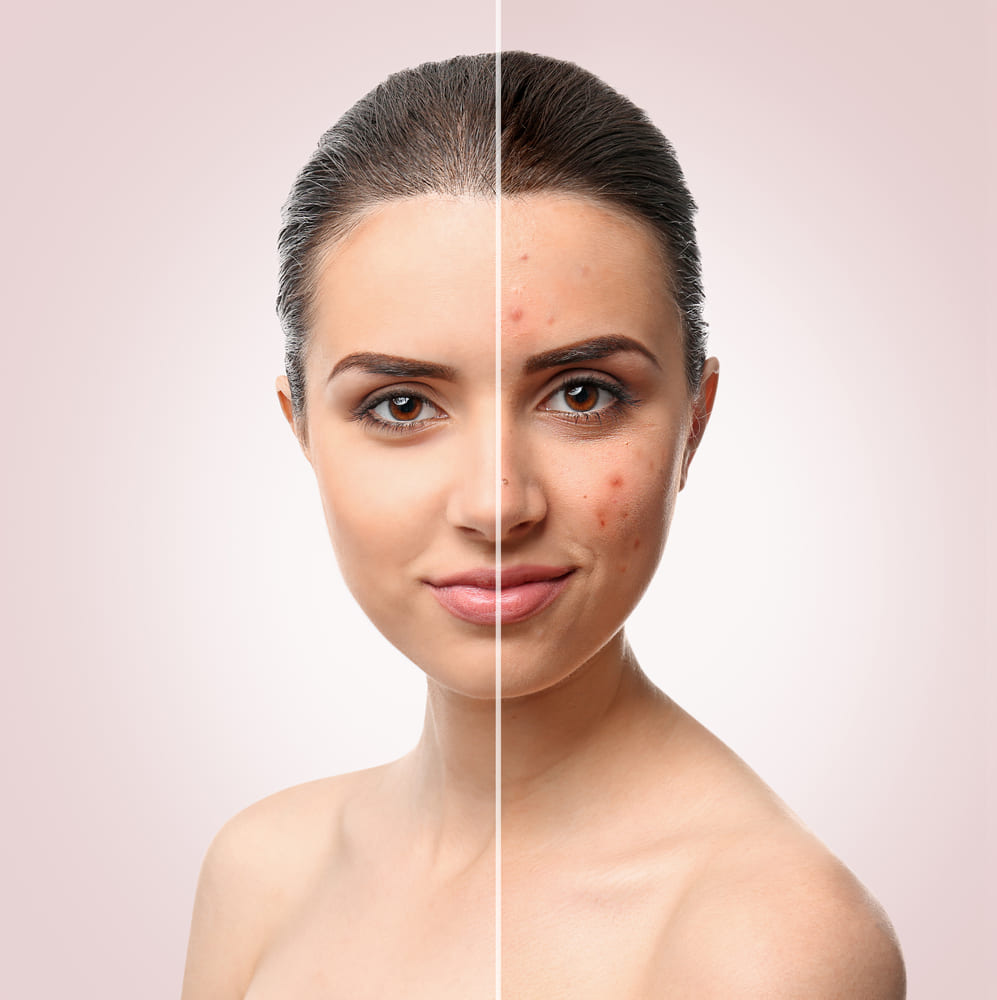
What is Acne?
Acne is a common skin condition that affects people of all ages, particularly during adolescence
and young adulthood. It occurs when hair follicles become clogged with oil, dead skin cells, and
bacteria. The most common types of acne include:
- Comedonal Acne: Characterized by closed (whiteheads) or open (blackheads) comedones.
- Inflammatory Acne: Involves red, swollen bumps (papules) and pus-filled lesions
(pustules).
- Nodular Acne: Larger, painful lumps beneath the skin surface.
- Cystic Acne: Deep, painful cysts that can cause significant inflammation.
Causes of Acne
Several factors contribute to the development of acne, including:
- Hormonal Changes: Fluctuations in hormones, especially during puberty, menstruation,
and
pregnancy.
- Excess Oil Production: Overactive sebaceous glands can lead to oily skin.
- Bacteria: The presence of Propionibacterium acnes, a type of bacteria, can trigger
inflammation.
- Diet: Certain foods, like dairy products and high-glycemic-index foods, may
exacerbate
acne.
- Stress: Increased stress levels can lead to hormonal changes that promote acne.
Acne Scarring
While many acne lesions heal without leaving scars, some individuals may develop acne scars. These
can be categorized into two main types:
- Atrophic Scars: Indented scars that occur when the skin loses collagen. Common types
include
icepick scars, boxcar scars, and rolling scars.
- Hypertrophic Scars: Raised scars that result from excess collagen production during the
healing
process.
Treatment Options
- Topical Treatments: Over-the-counter products containing benzoyl peroxide, salicylic
acid, or
retinoids can help manage mild to moderate acne.
- Oral Medications: Prescription medications like antibiotics or hormonal treatments (like
birth
control pills) can be effective for more severe cases.
- Professional Treatments: Dermatological procedures such as chemical peels, laser
therapy, and
microneedling can help reduce acne scarring and improve skin texture.
- Preventive Measures: Regular cleansing, using non-comedogenic products, and maintaining
a balanced diet can help prevent breakouts.
- Skincare Routine: Incorporating gentle exfoliation, moisturizing, and sun protection into
your
daily routine can support overall skin health.
When to Seek Professional Help
If acne is persistent, severe, or leading to significant scarring, it’s important to consult a
dermatologist. They can provide a tailored treatment plan and discuss advanced options for managing
acne and minimizing scarring.